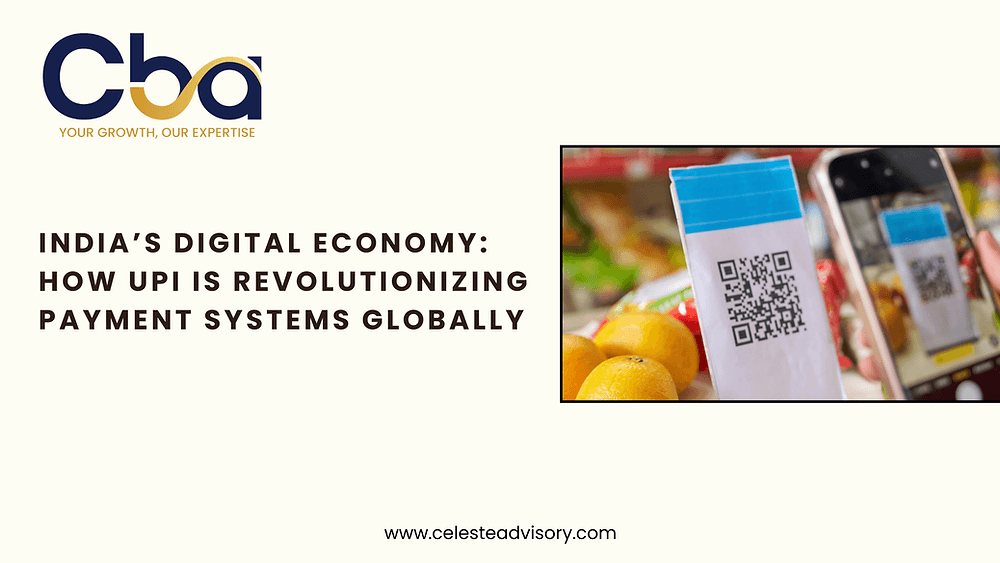
Here is the short answer. UPI, the Unified Payments Interface, is a real-time payment system launched in 2016 by the National Payments Corporation of India (NPCI) that lets anyone with a bank account and a smartphone send money instantly, at essentially no cost, through any participating app. It has become one of the largest instant payment systems in the world, crossing 9 billion transactions in a single month by October 2024 and continuing to grow since, and it now operates beyond India through partnerships in Singapore, the UAE, France, and Oman. For anyone watching where payments are heading in 2026, UPI is the clearest working example of what interoperable, low-cost, real-time rails look like at national scale.
This article covers how UPI works, the numbers behind its rise, what it changed inside India, where it is expanding abroad, and what its success signals for business owners everywhere, including in the US, where real-time payments are arriving on a different timetable.
What UPI Is and How It Works
UPI is an interoperable payments layer built on top of India's banking system. A user links one or more bank accounts to a mobile app such as PhonePe, Google Pay, or Paytm, and can then pay any person or merchant instantly using a simple identifier or a QR code, with the money moving directly between bank accounts in seconds. Interoperability is the defining design choice: any app can pay any other app, any bank, any merchant, which is why adoption compounded instead of fragmenting into walled gardens.
Three properties explain its dominance. Ease of use: multiple accounts, one interface, no card numbers. Speed: transfers settle in real time, around the clock, which reduced dependence on cash and checks. Cost: person-to-person transfers are free, and merchant acceptance requires nothing more than a printed QR code rather than a point-of-sale terminal.
The Growth in Numbers
The trajectory tells the story. In 2021, UPI passed 4 billion transactions per month. In 2023, it crossed $1 trillion in annual transaction value. By October 2024 it was processing more than 9 billion transactions in a single month, and volumes have kept climbing since. Alongside the domestic growth came the first international footholds: acceptance and linkage arrangements in Singapore, the UAE, France, and Oman.
Growth of that shape, sustained over nearly a decade, is rare in payments. It happened because the rails were public infrastructure, the apps competed on experience rather than on lock-in, and the cost to a small merchant of saying yes was effectively zero.
What UPI Changed Inside India
Financial inclusion moved first. UPI gave rural and low-income users a way into the digital economy, riding on the PM Jan Dhan Yojana bank account drive and Aadhaar-linked identity that had put accounts and IDs in hundreds of millions of hands. Small merchants moved next: a street vendor with a QR code sticker can accept digital payment without buying hardware or paying card fees, which pulled millions of tiny businesses into the formal payment economy. E-commerce accelerated on top, with platforms like Flipkart and Amazon India leaning on UPI's fast, low-friction checkout. The broader fintech buildout that followed, across payments, lending, and wealth management, is covered in our piece on how fintech innovations are redefining banking in India.
The macro effect is real as well: a payment rail this cheap and universal reduces cash handling costs, widens the tax base, and shows up in the productivity story behind India's path to becoming a $5 trillion economy.
UPI Beyond India
| Market | Arrangement | What it enables |
|---|---|---|
| Singapore | UPI linked with PayNow, the national instant payment system | Real-time transfers between Indian and Singaporean bank accounts |
| UAE | Integration with local acceptance networks | Indian travelers and residents pay merchants via UPI |
| France | UPI QR codes accepted at select merchants | A European acceptance beachhead for Indian visitors |
| Oman | Acceptance arrangement with local networks | UPI payments for the large Indian diaspora there |
The remittance corridor is the prize. Millions of Indians work abroad, and traditional remittance channels are slow and expensive; linkages like the PayNow connection point at real-time, low-cost transfers instead. For low-value cross-border payments, an expanding web of such bilateral links could even become a practical alternative to routing through SWIFT.
Why UPI Competes, and the Hurdles It Faces
Against the incumbents, UPI's advantages are structural. It operates at minimal transaction cost compared with card networks like Visa and Mastercard, its interoperable design adapts to other countries' banking systems, and its API-based architecture with strong encryption has held up at enormous volume. The hurdles are equally real: every new market brings its own regulatory and data privacy regime, not every country has the banking and identity infrastructure UPI assumed at home, and entrenched players, PayPal, Stripe, and the card networks among them, are not standing still. International expansion will be corridor by corridor, not a sweep.
There is also a business-model question UPI has exported along with its success: rails this cheap leave little revenue for the apps on top, which is a live policy debate in India and a caution for countries copying the model.
What UPI's Rise Means for Business Owners in 2026
Even for a US business that will never accept a rupee, UPI is worth understanding, because the pattern it proved is arriving everywhere. Real-time, low-cost, account-to-account payment is no longer hypothetical: the Federal Reserve's FedNow service and the RTP network are building out the US version, and QR-based checkout has gone from novelty to normal in much of the world, a shift we track in the future of contactless payments. The practical takeaways: treat card processing fees as a negotiable cost line rather than a law of nature, watch for account-to-account options that settle instantly and cost less, and if you sell internationally, revisit your cross-border payment costs regularly, because the corridors are getting cheaper.
Payment economics feed straight into margins and cash flow, which is where a finance partner earns their keep; our fractional CFO service reviews payment costs as part of the standard margin work for US businesses between $1M and $20M in revenue.
Frequently Asked Questions
What is UPI and who runs it?
UPI, the Unified Payments Interface, is India's real-time payment system, launched in 2016 and operated by the National Payments Corporation of India (NPCI) under the oversight of the Reserve Bank of India. It lets users link bank accounts to apps like PhonePe, Google Pay, and Paytm and move money instantly between any participating banks.
Can UPI be used outside India?
Yes, in a growing set of markets. UPI is linked with Singapore's PayNow for real-time cross-border transfers, and it is accepted through local arrangements in the UAE, France, and Oman, with more corridors under discussion. Coverage abroad is still merchant-by-merchant and corridor-by-corridor rather than universal.
Is UPI free to use?
Person-to-person UPI transfers are free for users, and merchant costs are minimal to zero, which is a deliberate policy choice to drive adoption. That pricing is also the system's open question, since the companies building UPI apps earn little directly from payments and rely on adjacent services for revenue.
How does UPI compare with Visa and Mastercard?
UPI moves money directly between bank accounts in real time at minimal cost, while card networks route payments through issuing and acquiring banks with interchange fees attached. Cards still lead in credit features, chargeback protection, and global acceptance; UPI leads on cost, speed, and merchant accessibility. The two increasingly coexist rather than one replacing the other.
Could UPI become an alternative to SWIFT?
For low-value cross-border payments on linked corridors, arrangements like UPI-PayNow already bypass the traditional correspondent banking chain that SWIFT messaging serves. Displacing SWIFT broadly would require many more bilateral links and regulatory alignment, so the realistic near-term role is a cheaper lane for remittances and small transfers, not a wholesale replacement.
The Bottom Line
UPI took India from a cash-heavy economy to the frontier of digital payments in under a decade, and its playbook, public rails, interoperability, and near-zero cost, is now shaping how every country thinks about moving money. The direction of travel for 2026 is clear: payments keep getting faster, cheaper, and more direct, and businesses that treat payment costs as a managed line item will keep the difference.
If you want help reading what shifting payment economics mean for your margins and cash flow, talk to us. It is the kind of question our advisory work answers every week.