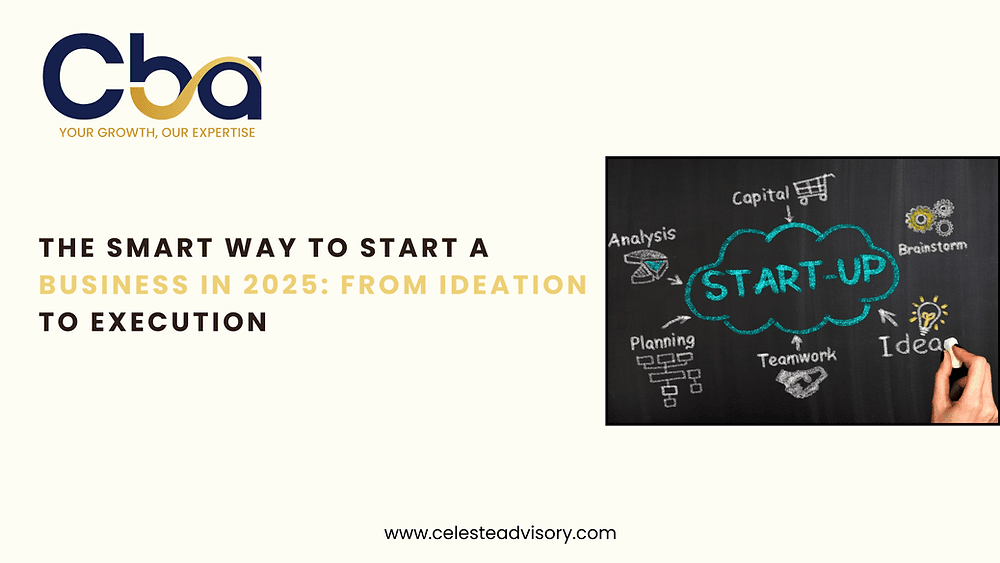
The smart way to start a business in 2026 is to spend money in the right order: validate demand before you build anything, do market research before you write the plan, write the plan before you raise money, and set up the financial infrastructure before you make your first sale. Most failed launches reverse that order. They build first, discover the market later, and treat bookkeeping as a problem for next year. This guide walks the sequence that works, from refining the idea to executing the launch, with the tools worth using at each step.
AI tools now compress the research and drafting stages from weeks to days, but the arithmetic has not changed. A business works when enough customers pay more than it costs to serve them, and every step below exists to test that equation before it can bankrupt you.
Step 1: Refine and Validate the Idea
Idea validation is the process of gathering evidence that customers will pay for a product before you invest in building it. Start with three questions: what problem am I solving, who has that problem badly enough to pay for a fix, and why would they choose me over whatever they use now? Write the answers down. Vague answers on paper are far easier to catch than vague answers in your head.
AI has made the early work faster. ChatGPT or Claude can pressure-test your positioning and generate competitor lists in an afternoon, and Google Trends shows whether search demand for the category is growing or shrinking. None of this replaces the strongest form of validation, which is a stranger paying money: a preorder, a paid pilot, a signed letter of intent. If nobody will commit before the product exists, treat that as data rather than as an obstacle to push past.
Step 2: Do Market Research That Changes Decisions
Market research is only worth doing if it can change a decision: what you build, what you charge, or who you sell to. Three moves cover most of it for a small launch. First, define the target customer narrowly enough that you know where to find them; "small business owners" is a category, "independent HVAC contractors with two to ten trucks" is a customer. Second, study competitors with tools like SEMrush or Ahrefs to see which keywords bring them traffic, and read their customer reviews; the recurring complaints are your opening. Third, talk to at least twenty potential customers directly. Surveys on SurveyMonkey scale the questions, but unscripted conversations surface the objections no survey captures.
The output that matters is a one-page summary: who the customer is, what they pay today, what they would pay you, and how many of them you can realistically reach. If those four lines do not add up to a viable business, the research just saved you a year.
Step 3: Write a Business Plan That Is a Financial Document First
A business plan is a financial document with a story attached, not a story with numbers at the back. Lenders and investors skim the vision and study the numbers, and you should read your own plan the same way. Five parts carry the weight: an executive summary short enough to read in two minutes; the market analysis from Step 2; a revenue model that names the price, the buyer, and the purchase frequency; financial projections covering at least eighteen months of cash in and cash out; and an operating plan with the first year's milestones.
Build the projections in a spreadsheet or a tool like LivePlan, and keep them honest. The projection's real job is to show which month cash runs out under realistic assumptions, so you can fix the problem while it is still on paper. Our guide to building a scalable financial model covers the mechanics, and the same model becomes your operating budget once you launch.
Step 4: Fund the Launch With the Cheapest Capital That Fits
Capital has an order of preference: use the cheapest money that fits the job, and give away ownership last. Here is the menu for a US launch in 2026.
| Funding source | Best for | What it costs | Watch out for |
|---|---|---|---|
| Personal savings / bootstrapping | Service businesses, lean product tests | Opportunity cost only | Underfunding the launch; no reserve left |
| SBA 7(a) or microloan | Established plans needing real capital | Capped spreads over prime, long terms | Slow process; personal guarantee |
| Business credit line | Working capital swings after launch | Variable rate | Balance quietly becoming permanent debt |
| Crowdfunding (Kickstarter, Indiegogo) | Consumer products with story appeal | Platform fees plus fulfillment | Campaigns are a marketing job in themselves |
| Revenue-based financing (e.g. Clearco) | Businesses with recurring revenue | Fixed fee repaid from revenue share | Effective cost can run high; read the terms |
| Equity investors | High-growth models needing scale capital | Permanent ownership and control | The only money you can never refinance |
Two rules sit underneath the table. Match the money to the need: a one-time equipment purchase suits a term loan, a seasonal inventory build suits a credit line, and neither justifies selling equity. And make the debt-versus-equity call with numbers rather than mood; our comparison of business loans versus equity financing walks through when each one wins.
Step 5: Set Up the Financial Infrastructure on Day One
Financial infrastructure is boring, cheap to set up on day one, and expensive to retrofit. The launch checklist: form the legal entity (an LLC is the default for most small US launches, with an S corporation election later if payroll-tax savings justify it); open a dedicated business bank account and never mix personal spending into it; set up QuickBooks or Xero before the first sale so every transaction lands categorized; and register for the taxes that apply to you, which can include sales tax where you have nexus, federal estimated quarterlies, and payroll taxes once you hire. The IRS charges penalties on missed estimated payments whether or not you knew they were due, so the business tax guide for new entrepreneurs is worth an hour before your first quarter closes.
A written budget belongs in this step too, including an emergency reserve for the surprises that arrive in every first year. Our startup budgeting guide shows the structure; the discipline of comparing actuals to that budget monthly matters more than the format.
Step 6: Build the Brand and Market on a Budget
Brand and marketing spending should trail revenue at the start, not lead it. A credible starting kit costs very little: one clear value-proposition sentence, a visual identity built in Canva, a storefront on Shopify or WooCommerce if you sell products, and one or two social channels where your actual customers spend time rather than a presence on every platform. HubSpot's free tier handles early customer relationship management, and Mailchimp handles the email list, which you should start collecting from day one because it is the only audience you own outright.
Pick one repeatable marketing motion and get good at it before adding a second: content and SEO if your customers search for solutions, short-form video if they browse, direct outreach if they are businesses. Zapier can stitch the tools together so lead follow-up happens automatically instead of depending on your memory.
Step 7: Execute, Measure, Adapt
Execution is a weekly loop, not a launch event. Choose a small set of numbers that tell you the truth: cash on hand, weeks of runway, new customers, revenue, and gross margin. Review them at the same time every week, because trends you check weekly get fixed in weeks, and trends you check yearly get discovered as crises. A quarterly SWOT review (strengths, weaknesses, opportunities, threats) is enough strategic structure at this stage.
The rule for staying agile: change tactics quickly and strategy slowly. If a marketing channel is not working after a fair test, kill it without sentiment. If the core offer is not selling after several fair tests, that is a pivot conversation, and the earlier you have it, the more runway you have left to act on it.
Frequently Asked Questions
How much money do I need to start a business in 2026?
It depends on the model. A service business can start for a few thousand dollars covering entity formation, insurance, software, and a basic website. Product and inventory businesses need working capital for stock before revenue arrives, which often means tens of thousands. Whatever the number, add a reserve for the months before break-even; running out of cash, not a bad idea, is what usually closes young businesses.
Do I still need a business plan if I am not raising money?
Yes, but a shorter one. Skip the polish and keep the substance: who the customer is, what you charge, what it costs to deliver, and an eighteen-month cash projection. The plan's real function is to expose which assumptions must be true for the business to work, so you can test the fragile ones first.
What is the best way to fund a new business?
Use the cheapest capital that fits the need: personal savings and early revenue first, then debt sized against a realistic forecast, then equity last, because equity is the only money you can never refinance. For established plans that need real capital, SBA loans typically offer small businesses the best combination of rate and term, at the price of paperwork and a personal guarantee.
Which tools should a new business set up first?
Accounting software before anything else: QuickBooks or Xero from the first transaction, so your books are clean from day one. Then a CRM once you have leads to lose, email marketing once you have an audience, and automation like Zapier once repetitive work appears. Add tools when a manual process starts costing real hours, not because a list said so.
When should a new business get professional financial help?
A bookkeeper pays for itself almost immediately by keeping the books clean and the tax filings on time. Strategic finance help, a fractional CFO or FP&A support, earns its fee once decisions start carrying real money: raising capital, hiring, signing a lease, or pricing a large contract. Getting the model and tax structure right early is far cheaper than repairing them later.
The Bottom Line
Starting a business in 2026 is a sequencing problem. Validate before you build, research before you plan, plan before you fund, and install the financial plumbing before the first sale. The tools are cheaper and faster than they have ever been; the discipline to use them in order is the scarce ingredient.
If you want the financial side of the launch built right the first time, from projections and budget to entity, tax setup, and funding strategy, our FP&A and advisory team does exactly this for early-stage and growing businesses. Talk to us before you commit the big dollars, not after.