Here is the short answer. Networking in 2026 rewards three habits: a LinkedIn presence that says specifically who you help and how, AI used as a research assistant rather than a ghostwriter, and a deliberate mix of digital and in-person contact that you measure like any other business channel. The tools have changed fast; the underlying trade has not. People send work, referrals, and introductions to whoever was useful to them before asking for anything. Every tactic below is a way to be usefully visible to the right people more often, without becoming one more source of automated noise in their inbox.
At Celeste Business Advisors, most of our client relationships began as referrals, so we treat networking as a business system with a real return, not a social nicety. Here is the current playbook for business owners.
Why Networking Compounds More Than Ever
Strategic networking is the deliberate building of professional relationships with the people most likely to become customers, partners, referrers, or advisors. Three conditions make it worth systematic effort in 2026. Remote and hybrid work has thinned casual professional contact, so the owners who network on purpose face less competition than the pre-2020 conference circuit ever offered. AI-generated outreach now floods every inbox, which raises the value of a genuine relationship the way spam raised the value of a personal introduction. And buyers check who you are before they reply: your profile, your posts, and your mutual connections are screened before your proposal is read.
LinkedIn: Still the Center of Gravity
LinkedIn remains the highest-yield professional platform for US business owners, and most profiles still waste it. The fixes are unglamorous. Write a headline that names your customer and outcome ("Fractional CFO for $1M-$20M service businesses") instead of a job title. Send connection requests with a specific, honest sentence about why; acceptance rates move meaningfully with one line of real context. Comment with substance on posts in your industry a few times a week, because comments put you in front of someone else's audience for free. Post original observations from your own work, the lessons a competitor could not copy from a template. AI drafting tools can help you outline, but rewrite the final text in your own voice; readers in 2026 skim past obvious AI cadence the way they skim past stock photos.
Use AI as a Research Assistant, Not a Ghostwriter
The productive use of AI in networking is preparation, not automation. Before a call or event, an assistant like ChatGPT or Claude can summarize a company's site, recent news, and likely priorities in minutes, so you open conversations at the level of their problems rather than your pitch. LinkedIn's Sales Navigator surfaces warm paths: shared connections, role changes, and companies matching your customer profile. Tools such as Crystal profile communication styles so a first message lands closer to how the recipient likes to work. The line to hold: automate the research, personalize the contact yourself. Fully automated "personalized" outreach reads as what it is, and it spends your reputation to save you minutes. The same discipline applies inside your business; our roundup of AI tools for finance teams makes the identical point about judgment staying human.
Where to Show Up: Channels Compared
| Channel | Best for | Time cost | The trap |
|---|---|---|---|
| LinkedIn (organic) | Long-term visibility with buyers and referrers | A few hours weekly, ongoing | Posting generic AI content that builds nothing |
| Industry communities (Slack groups, Fishbowl, associations) | Peer relationships and candid market intelligence | Low, but consistency matters | Lurking forever; value goes to contributors |
| AI-matching platforms (Lunchclub and similar) | Serendipitous one-on-ones outside your circle | One call at a time | Interesting chats that never connect to your goals |
| Virtual events and webinars | Reaching a national audience cheaply | Low per event | Attending passively and skipping the follow-up |
| In-person and hybrid events, local chambers | Trust-building and referral relationships | Highest per contact | Collecting cards instead of starting relationships |
Pick two channels and work them consistently rather than sampling all five. Depth in one community outperforms a shallow presence everywhere, because referrals come from people who have seen you show up repeatedly.
In-Person Made a Comeback, With Better Follow-Up
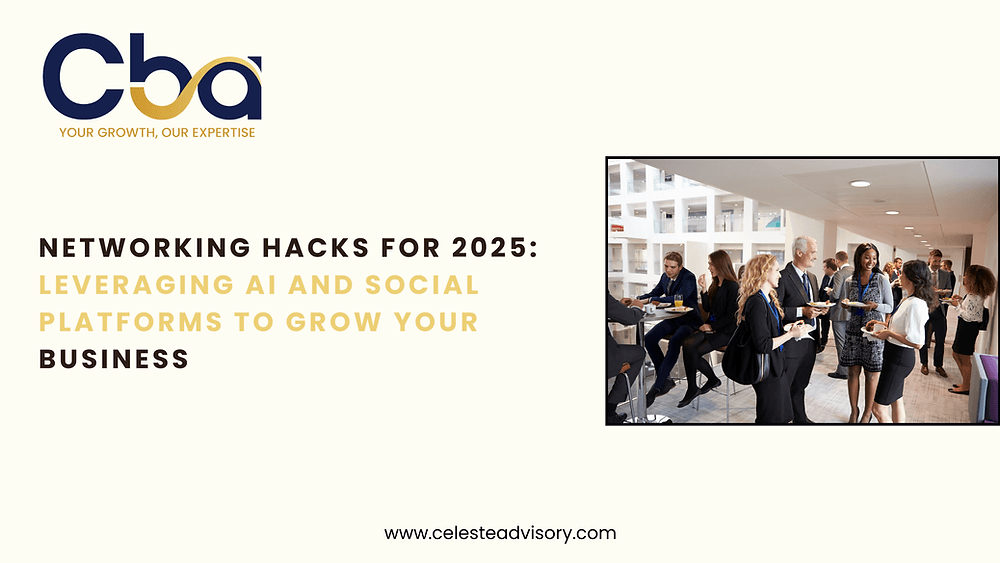
After years of screen-only contact, face-to-face events carry more weight, not less, and most are now hybrid. The preparation is the advantage: review the attendee or speaker list beforehand and pick a handful of people you genuinely want to meet, have a one-sentence answer to "what do you do" that names your customer, and use a digital business card app such as HiHello so contact details survive the ride home. The heuristic that separates professionals from card collectors is follow-up within 24 to 48 hours, referencing the actual conversation, with something useful attached: an article, an introduction, an answer you promised. One real follow-up beats ten new handshakes.
Your Reputation Arrives Before You Do
A personal brand is simply what people find and conclude about you before you meet. For a business owner it is built from consistent posts about your actual expertise, a professional photo, and the occasional longer piece, a guest article, a webinar, a podcast appearance, that proves depth. You do not need to become an influencer; you need the person Googling you before a meeting to find evidence of competence. We cover the mechanics in our guide to building a personal brand as an entrepreneur.
Measure It Like a Channel
Networking earns a line in your growth plan only if you track it. Keep the metrics light: new relevant connections per month, conversations started, and, the number that matters, opportunities or referrals attributable to networking each quarter. A simple spreadsheet or CRM tag is enough. If a quarter of effort produces relationships but no pipeline, change the channel or the audience, not the goal. This is the same discipline we push on every business number; see the power of data-driven financial decisions for how measurement changes behavior.
Frequently Asked Questions
Is LinkedIn still worth the effort for business owners in 2026?
Yes, and its yield has arguably risen because so much competing content is now obviously automated. A specific headline, weekly substantive comments, and occasional original posts drawn from real work will outperform daily generic content. Buyers and referrers check LinkedIn before responding to almost any business approach, so the profile works even while you sleep.
How can AI help with networking without making it feel fake?
Use AI before the interaction, not as the interaction. Let it research a company, summarize a prospect's background, or suggest talking points, then write the actual message yourself. Recipients increasingly recognize machine-written outreach, and the cost of being caught automating a "personal" note is higher than the minutes saved.
How much time should a business owner spend networking?
A useful heuristic is two to four focused hours a week, split between one online channel and one recurring community, sustained for quarters rather than weeks. Networking compounds like interest: small consistent deposits beat occasional bursts around an event. Track referrals quarterly to confirm the time is earning its keep.
Do in-person events still matter now that everything is online?
They matter more per hour than any digital channel because trust forms faster face to face, especially for referral relationships. The multiplier is preparation and follow-up: choose events your customers or referrers actually attend, decide in advance who you want to meet, and follow up within two days while the conversation is fresh.
How do I know if my networking is actually growing the business?
Attribute revenue honestly. Tag every lead with its source, count the opportunities and referrals that trace back to networking each quarter, and compare that against the hours invested. Relationships have value beyond immediate sales, but if two consecutive quarters produce no pipeline at all, the channel or the audience needs to change.
The Bottom Line
Networking in 2026 is a system: a sharp LinkedIn presence, AI doing the research while you do the relating, two channels worked deeply, disciplined follow-up, and honest measurement. The owners who win at it are rarely the most charismatic; they are the most consistent, and they give value first.
Your advisors belong in that network too. If the growth those new relationships bring needs a financial plan behind it, our fractional CFO service builds the forecasting and capacity planning to say yes with confidence. Talk to us about putting numbers under your next stage of growth.